You can now read a shorter, summarised post on UXLibs 2023 here:
UXLibs 2023: Summary and Themes
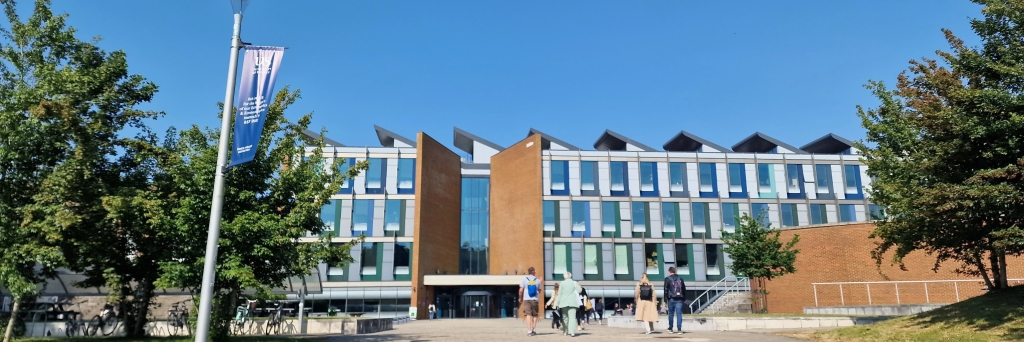
Somehow it is June, and this week I’m attending the UXLibs Conference 2023 (@UXLibs). This is the 7th annual international User Experience in Libraries conference, and this year it is taking place at the University of Sussex in Falmer, near Brighton. The theme for this year is ‘Connections and Collaborations’, more specifically looking at:
- How we ‘collaborate with specific user groups to co-create more relevant and inclusive library services’.
- How we might ‘forge connections with external groups or individuals in order to improve both our processes and results’.
- How we can ‘persuade senior managers and stakeholders of the value of UX work’.
If you know me personally, follow me on Twitter/Instagram, or are connected with me on LinkedIn, you may remember when I live-blogged LILAC 2022. This is going to be fairly similar to that, but rather than a separate post for each day, I’m going to do it all in one post – the one you’re currently reading! If you have no idea what I’m talking about, put simply, I will be updating this post regularly over the next 3 days (after every workshop / keynote / presentation). So let’s get started!
Day 1:
Making it RIGHT: employing creative UX research methods for richer engagement (Andy Priestner – Chair, UX in Libraries)
Andy opened the conference discussing and encouraging us to think outside of the interview format. Three alternative were discussed, none of which are about talking first, they involve flexing other forms of creative expression: drawing, writing and building.:
- Cognitive mapping – users drawing pictures of their experiences
- Love and break up letters
- Generative play – users building physical models of their experiences (e.g. with Lego)
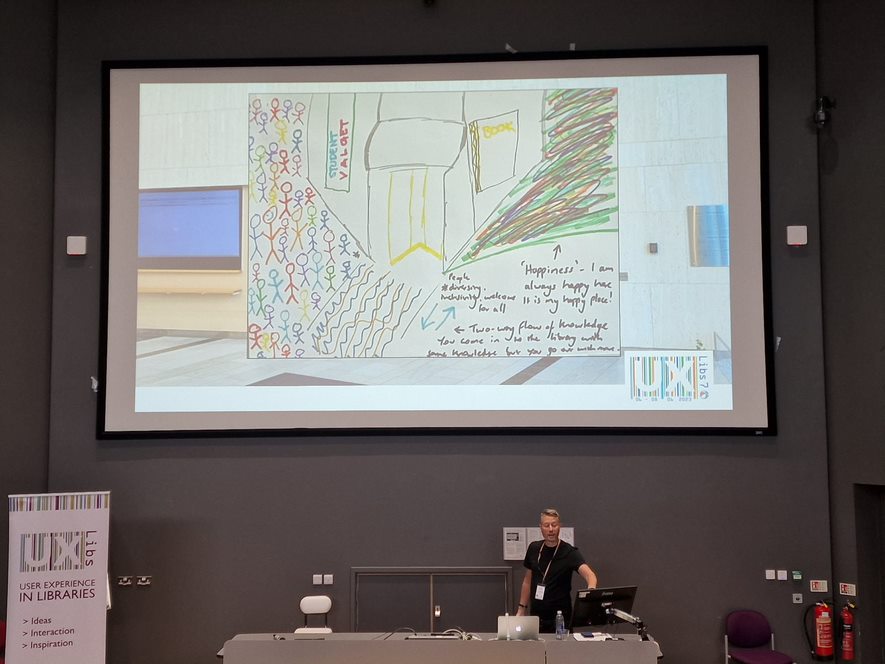
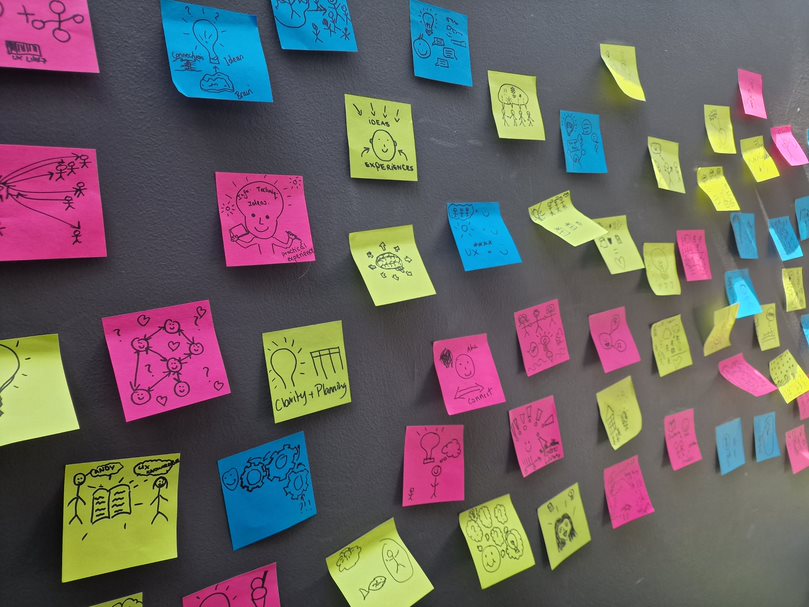
We assume people will not want to do something – but most people will be more creative than you imagine. We just have to give them the opportunity. And so we were also given the opportunity to try cognitive mapping out on ourselves. We were asked to draw on a post-it with a Sharpie what we hoped to get out of this conference – it could be one thing or lots of things.
Andy also told us two things that we need to STOP doing. And they were…
- Stop worrying about bothering people! (people love to be asked, they want to tell you stuff! And if they say no, the worst thing is they said the word no.)
- Stop worrying about the time of the year! (people always want to get involved, even when they’re doing exam revision – they want a break!)
Keynote: Marie Østergård – Public Participation as Democratic Infrastructure
Marie Østergård is the Library Director of Aarhus Public Libraries, including Dokk1 and 17 other branches.
Dokk1 vision:
- Space for co-operation
- Place for dialogue, knowledge, ideas and inspiration
- Open informal learning space
- A unique place for children and families
You can see there’s no mention of books or technology (they change constantly) – people were the focus of the Dokk1 vision (generally people don’t change over time).
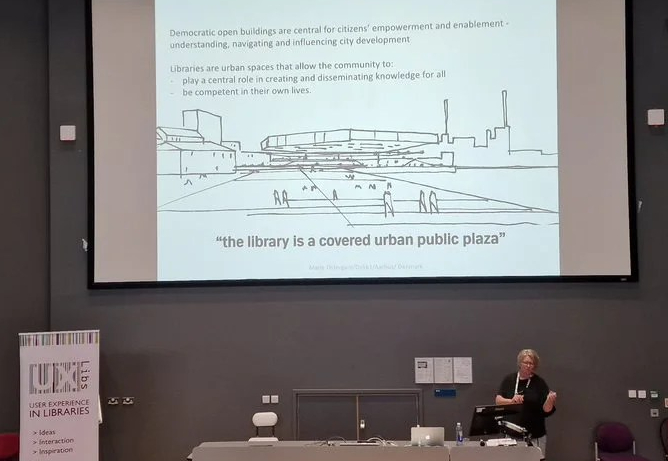
The library is a democratic space – similar to an urban public plaza. We need to structure our libraries around this as we need to create a space were people are able to mingle with other people that they wouldn’t normally connect with and that they might even learn from. The spaces need to make people feel at home.
There’s this idea that libraries are obsolete because of how easy it is to access information. So with Dokk1 they focused on what can only be experienced in the library. Rather than the library being a space full of media. The library space is the media. They didn’t feel there was any other place like this. So they couldn’t approach it in a traditional way, they needed to put the users at the centre of development.
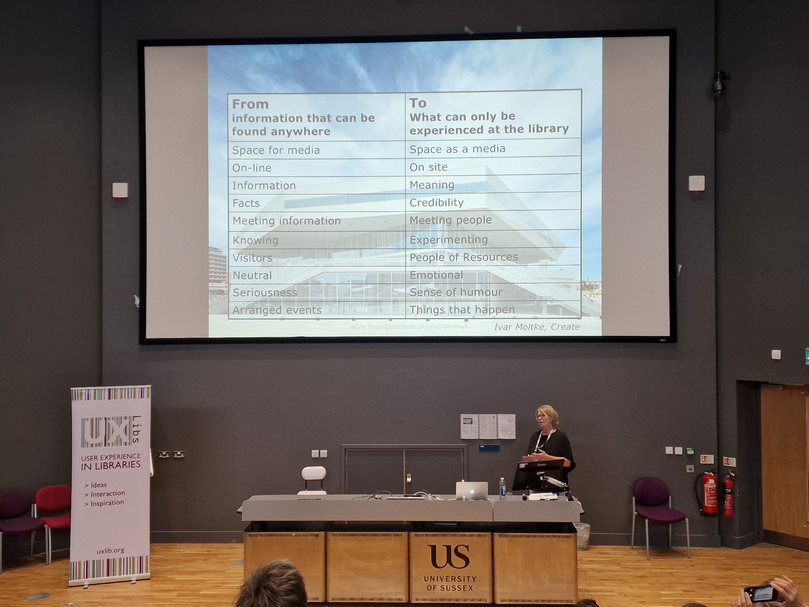
They had worked with users for 20 years, trying lots of different methods. They didn’t call it design thinking then, but in essence that is what it is. With this development they wanted to go from everything being owned by the library, to being completely user-driven.
They spent 2 years training 10 members of staff to become design thinking trainers who were then able to train everyone else. Essentially they believed everyone needed to know what design thinking was and what it could be used for. This has allowed every single staff member, regardless of what tasks they usually carry out or what their educational background was, to apply design thinking to their work and be capable of developing partnerships internally and external to the library.
In 2013, they developed the Design Thinking Toolkit for Libraries. And later, the Creative Learning Research Group at Aarhus Public libraries. This group involves reflecting and acting on the stuff you are doing (iterative process). It is a messy thing, you have to be constantly moving, changing, prototyping. They did and used all of this to inform and develop the space of a new library.
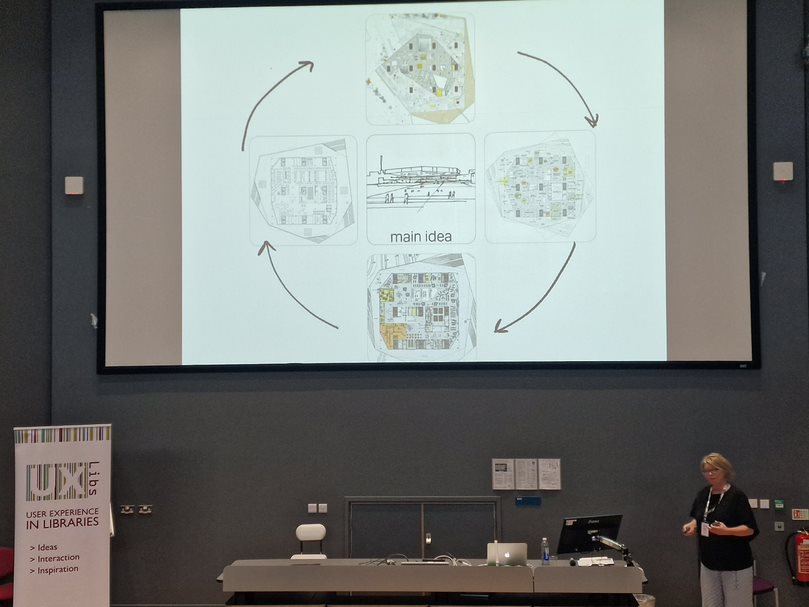
Now they’re using design thinking as a library service – teaching people of the city how to use design thinking in their own lives and work.
One of the most interesting and timely topics of Marie’s keynote was a discussion of democratic confidence and democratic self-confidence. In Denmark, they believe libraries can be vehicles for democratic participation. Democratic confidence is the trust that you have influence and will be heard. Not always necessarily in a political sense, but in any space. Democratic self-confidence is the belief that your voice is worth listening to, that you’re valuable enough to be engaged with.
At Dokk1, they explored low democratic trust. They wanted to find out how they could make the threshold lower for homeless people. There was a big homeless community that felt like they couldn’t enter the library. So they took the library outside into the open space – homeless people who previously felt the space wasn’t for them felt comfortable enough to engage in conversation about how Dokk1 could make a library or library activities that were more accessible for them.
Marie discussed a democracy fitness, which essentially is a concept that presents soft skills like active listening, empathy, disagreement (allowing it) and compromise as muscles that you need to train. They’re working with young people to help improve their democracy fitness.
And finally, the physical space. They believe that if you plan and programme every single thing within your physical space, there is no room for co-creation or adaptability. The point is that the spaces look different every single day, and you can do lots of different things within them. The questions they constantly ask themselves are – How can we say yes more? And how do we develop a space so we can say yes more?
Coming Together – Team Challenge
Before the conference, we were assigned to teams (I was in the Crab – orange team).
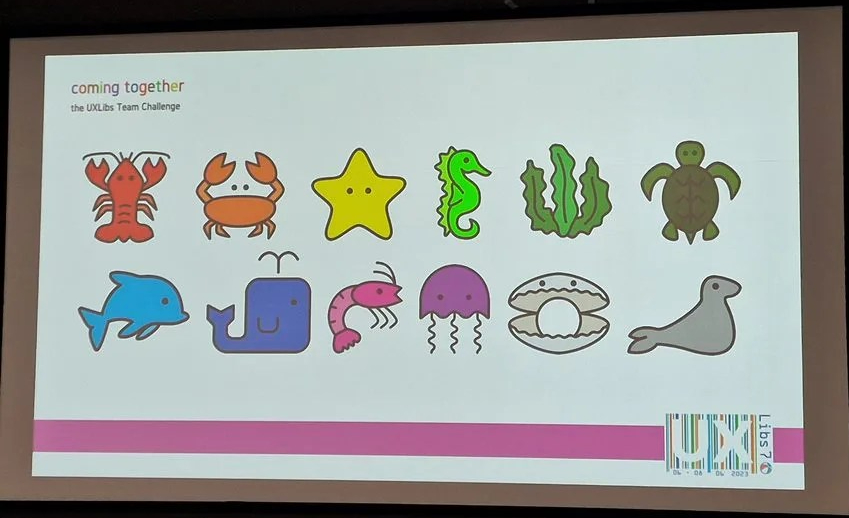
Tomorrow we will be working in teams responding to a case study relating to user experience research and design work in libraries. Each team will be split in half – half are users the rest library staff.
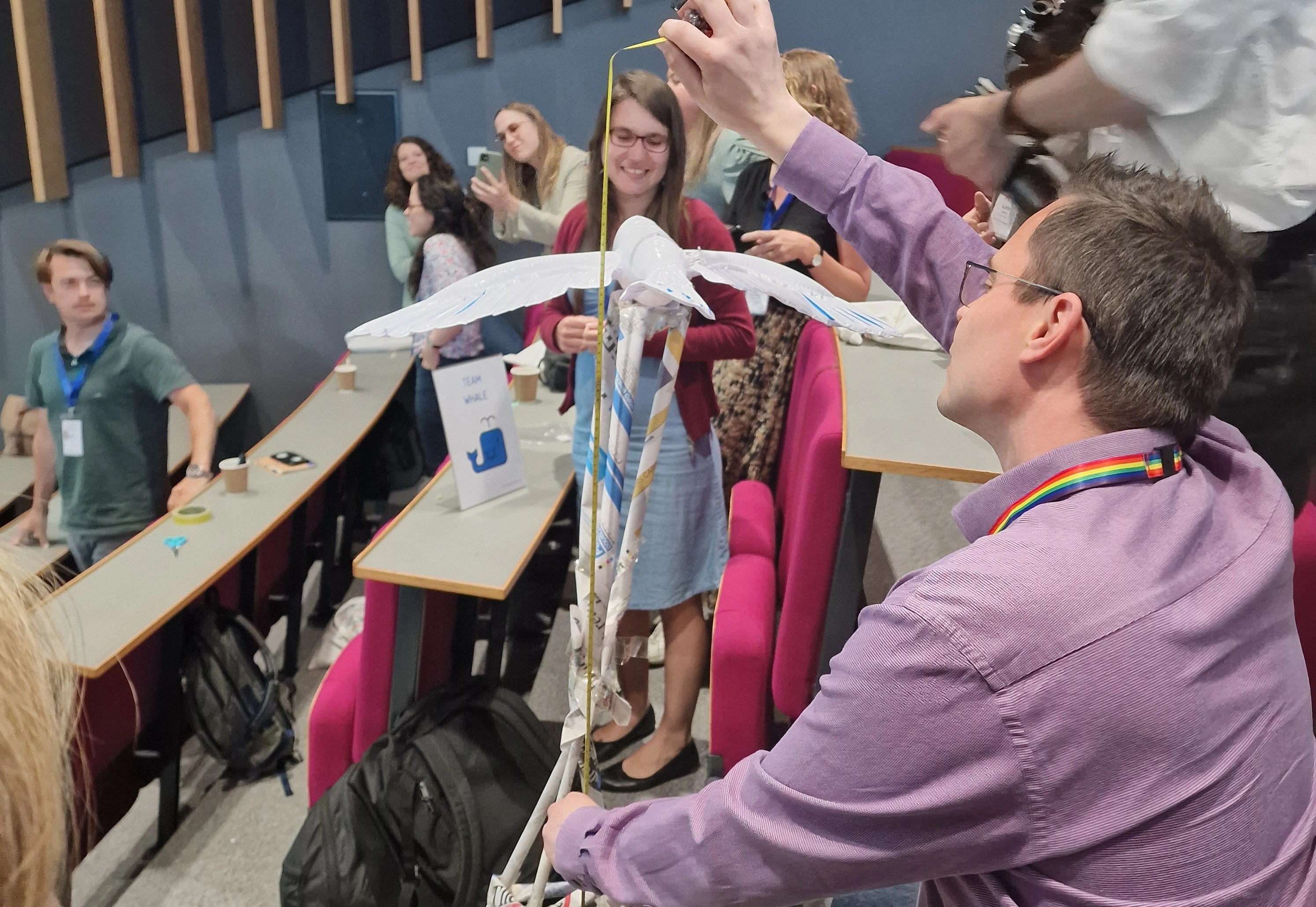
Today’s session was focused on us bonding as a team. We were given a newspaper, some sticky tape, scissors and an inflatable seagull. All of which we have to use to build a newspaper tower on which our inflated seagull can perch without falling off. We have 10 minutes. (The seagull could not be taped to the top it must stand of its own accord!)
Emma Thompson (@LibraryEmma) – Design, Align, Combine: Getting Buy-In for Your Great Ideas
Emma has experience managing up, managing down and managing sideways and believes that everyone can influence positive change – you don’t have to be a leader. Working with your strengths within the role you’re in is key.
Design:
Can a small change make a big difference – Emma was working in a library where the law department was becoming bigger and more confident. They wanted their own library, their own home. The library couldn’t do that, but they realised they could work with what they had. They spoke to law students and staff – they wanted to feel like it was their place – cosy, like home. The library shelves were parallel, so they moved the shelves to a more diagonal position. It was such a small change, but it made a big difference.
Align:
Aligning with the strategy, goals and objectives of the wider organisation are really important. Consider the key strategic aims of your organisation – what do they have pride in? But also – what are the problems? What keeps the senior leaders awake at night? That they need to change?
Emma had a meet and greet with a new member of staff and they asked – what are the issues here? And what is the company most proud of? If you don’t know – ask! Only then can you align your own strengths and ideas with the organisation.
Emma discussed the 2 Manchester Metropolitan University core goals –
- Providing excellent education to transform our students’ lives.
- Delivering and applying excellent research to advance knowledge and tackle the grand challenges of our time.
When Emma is thinking about new strategies or if someone goes to her about new ideas – if they don’t align with those 2 core goals then it probably won’t happen.
Emma asked us all to look at the 3 key goals of Singapore Management University and thinking about how the things we are working on, or the ideas we have might align with those goals.
- Digital transformation
- Sustainable living
- Growth in Asia
(Feel free to try this out for yourself)
Combine:
There’s an Irish saying: “don’t leave your fiddle at the door” – shout about what you are doing, and shout about it within your organisation. We can learn a lot from salespeople when it comes to selling our ideas. It helps to have a catchy name or strap line for your idea – can you say what you want to achieve in one sentence, phrase or word?
Combining with people can mean you can work with others on your idea (they can add much needed support). But it can also lead to letting go of your idea – it might be better taken forward by someone else. The more ideas you have, the better chance that one of those ideas will be great. The lovely thing about bringing people together is that you get lots and lots of ideas. Not all of them will be great, but some will be.
Gathering Allies:
Working with others, allows you to influence them. If you look at push influencing styles (leadership/management styles), these can be helpful, but it can become too much. With the pull influence style you can use wherever you are and whoever you’re working with – enabling, testing understanding, seeking understanding, building/opening up, getting the person to come to the idea are all ways you can do this and these are great examples of UX too.
Traditionally, librarians are the people who answer questions – they have all the answers. But we need to ask really good questions – UX is a great example of that.
A New Learning Development Service – University of Liverpool:
Emma’s team at the University of Liverpool were doing a lot on information literacy – but it was very library-centred. “If you don’t know what information literacy is, we will tell you” was the general message. But students wanted help with their essays.
The team worked with marketing students who did some interviews with other students – they believed that the library should provide more study support. Emma wanted to move forward with this, but was told it wasn’t core business (the University was focused on research).
However, there was an issue with second year students moving on to third year – so this was the connection Emma made. Emma argued the case that this issue could be helped by having more study support in the library. She gathered allies, and they collaborated and developed an elevator pitch. They called it Know How. The director finally agreed.
Future Developments at Manchester Metropolitan University:
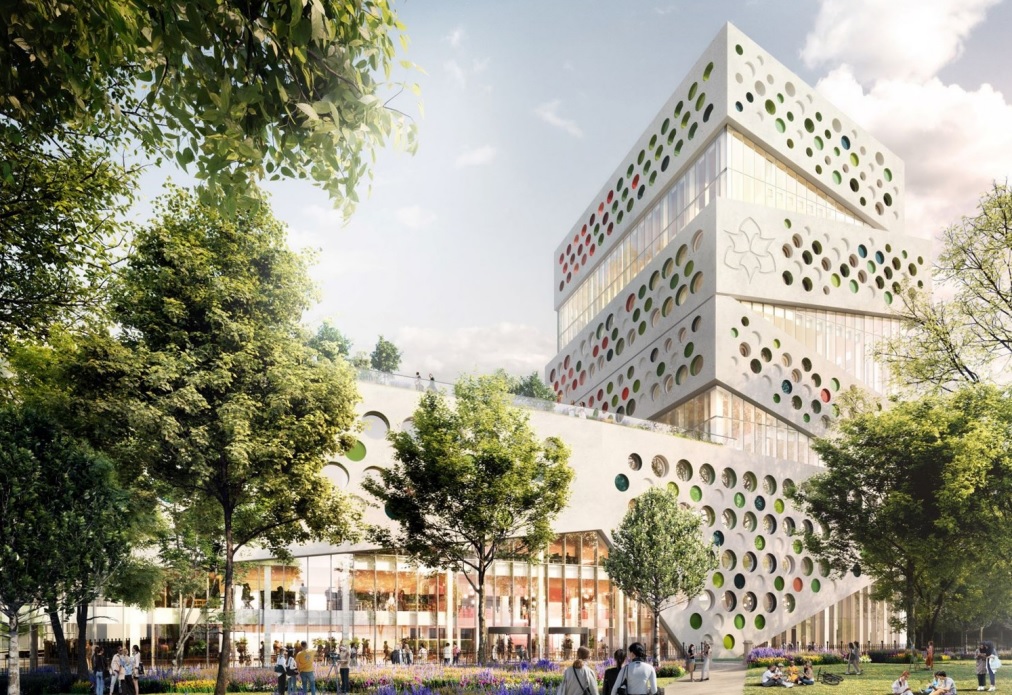
Emma announced the future development for Manchester Metropolitan University – a new library building. The project of which will be completely user-driven.
Summary:
- Think like an entrepreneur
- Who do you need to influence?
- What will make them listen?
- Who can you work with?
Day 2:
Keynote: Arun Verma – Be Your Most Disruptive Self: Collective Action in Experience and Design
Arun Verma (@DrArunVerma) is the Head of Inclusion for the University of London, Academic Tutor (University of Dundee) and Fellow of the RSA.
There are some things in Universities that just do not work, and we all experience barriers. Arun Verma puts forward the idea of ‘constructive disruption’ (we may see this happening under a different name: change management or transformation – as some language is more palatable than others) as a way to make real intersectional change within our organisations.
Arun gave us prompts to create an ‘action’ and so I will provide the prompts throughout when he presented them, and feel free to try it for yourself.
Action: Consider one action that you can do to be more disruptive. Write this action down and keep hold of that note.
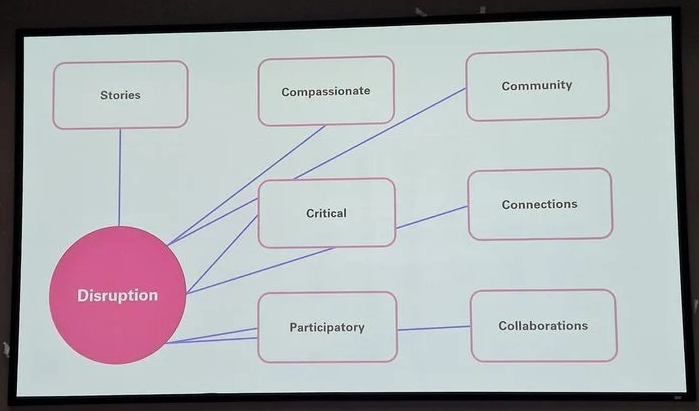
Back to the presentation – Community comes in different forms but it is at the core of how we communicate, collaborate and how we challenge each others. There are different types of community:
- Resistance (maybe against a strong force)
- Kindness
- Compassionate
- Critical
- Reflective
- Directive
- Intersectional (these may represent different people from different backgrounds / roles / experiences)
UXLibs is a community in itself. We have a similar shared language (we were provided with a glossary which was compiled by Andy Priestner so we were all on the same page). We also have an understanding of library services. Some of us may work in the same institutions. In this space we have an understanding of what it is to be a librarian.
But, how do we involve those who are aspiring to work with us and libraries? (Includers, aspirers, seniors, execs, resistors) How do we connect with those communities and start a dialogue? We may find ourselves saying we want to co-create with these people, we may even have consultations with them, but then we don’t continue further with that. We need to keep connecting with those unusual suspects and think about participation as a continuous journey. Consider things like having a challenge panel of students and involving those voices throughout the entire process.
This is where intersectionality can be really powerful. Intersectionality can be seen as a discussion entirely about oppression, but that isn’t what it is. Intersectionality is an inclusion practice developed in the 1980s and it was designed as a tool for action. So, how do we do UX design with intersectionality? When we’re looking at users and people, we tend to think about their silo’d characteristics. But people are made up of multiple factors and characteristics. Can we start looking at how a whole person is moving through the university system?
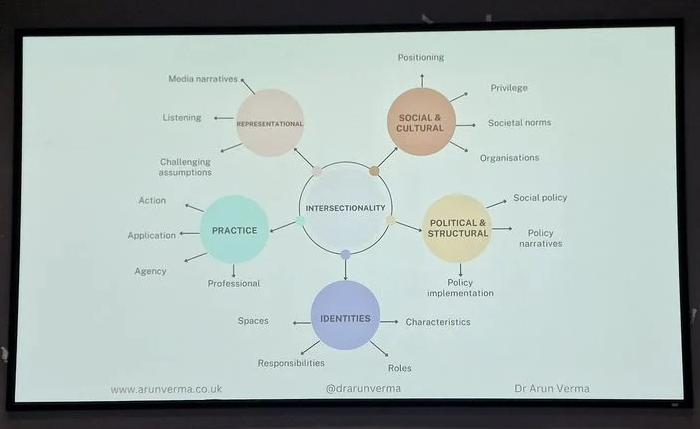
- Can we create user experience journeys that consider things like social and cultural issues like immigration?
- Or identities like those with disabilities?
- Who is challenging assumptions in the room where there is a lack of diversity?
Action: Take a look at your note, and think about what you can add to that action knowing a little more about intersectionality.
UX tells stories.
“Narrative is imperative to deepening our connection with those in and out of our sphere of focus. All communities have commonalities: that they are comprised of people who have and share their stories and the community itself wants to tell a story as well.”
Arun Verma, 2023
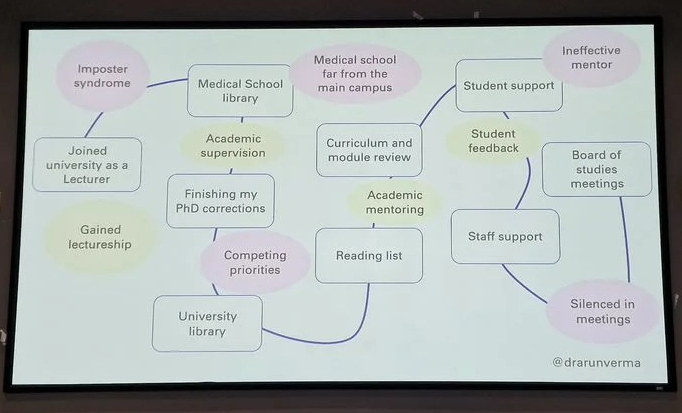
Arun’s experience through the beginnings of his university career showed up many barriers – for example there was a disconnect between the medical school and the main campus. In study meetings he sat silently, as he wasn’t sure how to engage.
The libraries were where he could find the right information and get the support needed, but that wasn’t translating well to his actual experience. So he considered, could it be more linear? Could the medical school library help with imposter syndrome? It’s not that libraries can solve these issues but they can play a part.
Libraries naturally support inclusion – libraries have always been a safe place, they are a place to reflect, ask questions. Something to think about is – what part do libraries play in practicing zero tolerance of exclusion? There are barriers to this – competing priorities, poor practices, competing inequalities to name a few. All of these things interconnect and are messy. But if we aren’t disruptive we won’t be able to tidy up this mess.
Disruption is the kind thing to do.
Intersectionality and Action Design:
- Discover – Is the evidence underpinning the action intersectional? Does the data reflect different voices, experiences, and structures? Are there opportunities to influence those to invest in the intervention?
- Define – Is the definition of the action meeting the requirements of the most marginalised and deprived?
- Develop – Is the development of the service developed with others? Is it participatory? (co-creation?)
- Deliver – Is the delivery and implementation of the action/intervention reflective of the previous phases?
Action: Take a look at your action again. Reflect and think about if there is anything you might change, have a go at redrafting.
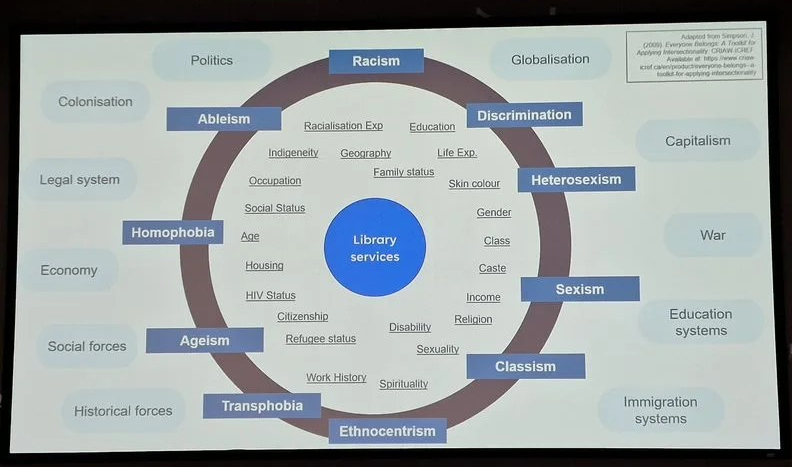
Arun recommended that librarians who are interested in UX reflect on the above wheel as a critical tool for the work we are doing.
Final Action:
- Who is responsible?
- Who is accountable?
- Who needs to participate?
- Who needs to be informed?
- Then add a date of when you will start this action.
From Invisible to Popular: How We Increased Attendance to a Library Course by 692% – Gunvor Bjerkelund Røkke and Maria Sindre
Gunvor Bjerkelund Røkke is a Senior Research Librarian at NTNU and Maria Sindre was previously Head of Communications at NTNU Library and is now Senior Communications Advisor at Norsk helsenett. Their talk discussed how they used UX methods to improve attendance to a library course entitled ‘Kickstart Your Thesis’.
Before this course students were offered a one-day event with several talks and topics that students could choose from. The feedback showed that most students followed the same path and there was too much information in too little time. So the course was developed to include 5 workshops:
- Introduction to the Library
- Motivation and Study Technique
- Finding literature, be critical of sources, avoid plagiarism
- Reference management in EndNote / Zotero / BibTeX/BibLaTeX
- Academic Writing
However, one of the workshops wasn’t quite what students expected, so this was dropped and the course became a 4 workshop course that was spread over 4 weeks.
Students made it clear that they wanted a hybrid format. In 2020 people said they wanted group work, in 2021 they tried it but attendance was low. It was a good idea though so they embedded it and made space for group discussion, and the feedback on this from students was positive.
The focus was to increase attendance, here’s what they did:
- Looked at statistics and feedback from previous workshops.
- Held interviews with students on the course format and content.
- Had a UX Forum on social media, looking at previous successful campaigns, and the kind of content that students engaged with (not just liked, but actually clicked on).
Personas:
Using the information they had gathered, they developed personas for their primary target audience. Initially this was international students, as the course was specifically for them. However, from 2022 they included (and allowed attendance from) native students and lecturers.
With these personas they were able to develop a user journey with phases that informed the workshops and course as a whole. They then were able to identify what they needed to do:
- Increase awareness at a relevant time during the semesters.
- Make it clear it is a LIBRARY series and what the student would gain from it.
- Use other students in marketing.
- Indicate the numbers of places on the course so students were encouraged to book their place quick.
KPIs:
- Social media – look at increasing reach and engagement
- Website – increase no. of visitors and assess whether they clicked where they needed to.
- Course portal – did they sign up?
Communication Plan:
They developed specific messages (tone of voice, words, phrases, sentences) for different phases of the user journey (and the different workshops within the course). They also wanted to improve the kind of content they were sharing on social media. Feedback from students found that short funny videos were more welcoming that serious, professional videos – these were seen as something an advertising agency might create.
They found that students were encouraged by each other (students were asked where they heard about the course they signed up for, and the intranet, friends and lecturer were the top 3. Librarian was the lowest!) So NTNU students created videos that explained what they personally got from the workshop. They did interview-style posts on the website so students could get an idea of what they would get from the course. Other social media content focused on improving the perceptions of librarians so they were seen as friendly and approachable.
Although their aim as a team was to increase attendance by 200%, they actually increased it by 692%.
Connections in Coastal Communities: A New Era for Public Libraries – Kerry Murray
During the pandemic, the 47 libraries in Norfolk played an integral part in supporting the community – as did many public libraries at the time. It spurred on a project plan to improve three libraries: Great Yarmouth, King’s Lynn and Hunstanton.
In 2025 the community are going to be able to access hubs where they can get all kinds of support. So, Kerry and her team have made and are making sure they’re connecting with partners and communicating with neighbours as regularly as possible throughout the process. They’re connecting with adult learning, project managers from the council, design experts and champions from the local community. They are inspiring enthusiasm around these hubs and they want the buildings to be exactly what the communities around them want and need.
[picture coming soon]
The towns have lost their buzz over the years, they’ve got high unemployment, low paid jobs, and they need to regenerate the high streets and along the way enhance their library services in an effort to improving the lives of the communities but also attract more visitors to the towns.
The Developments:
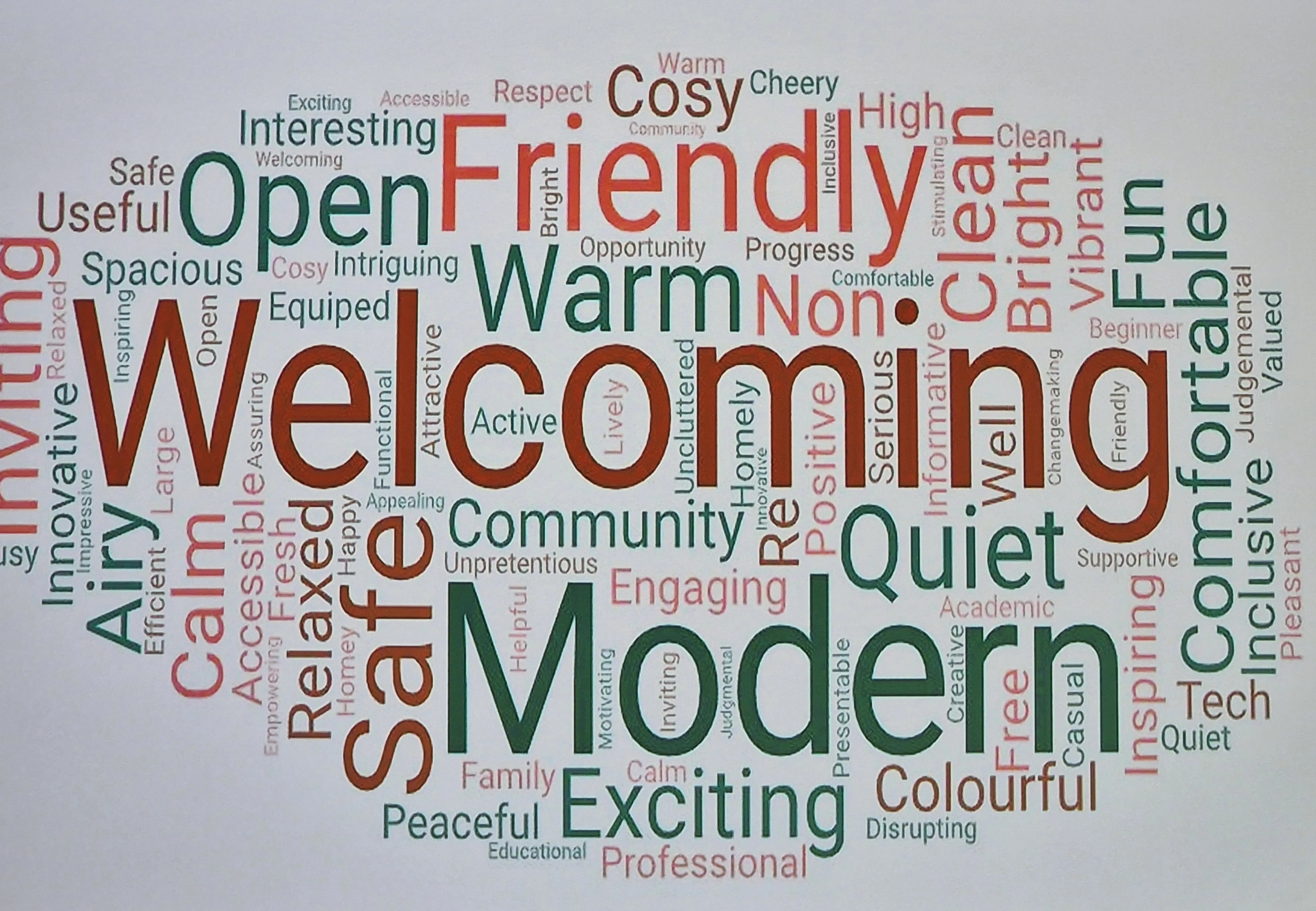
People want to know what the library in their neighbourhood is going to look like, so they shared images of what it could look like (spacious and open to all).
Great Yarmouth library is currently in a 1960s building near the river and is prone to flooding. They’re going to be moving to an old department store, which will be repurposed. When stripping it out they have discovered some beautiful building features, including some gorgeous stained glass windows. So this looks like it’s going in a positive direction.
However, King’s Lynn are currently in a Carnegie building and are moving to an old Argos building. This has understandably caused some upset in the community. However, the building will have a new facade, and as behind this building is a late 1800s building, they want the new building to be sympathetic to that.
Hunstanton was moved out of their old building in 2018, and were sent to a former children’s home which is on the outskirts of the town (not great for regular library-goers). So they’re moving back into the old building but it will be revamped.
So, 3 hubs with very different things happening and they all needed to be treated differently. They’re all happening at the same time but they can’t really be treated as one whole project because they are all so different – King’s Lynn for example is going to need extra care and attention. However, King’s Lynn is not accessible, and they want all 3 to be accessible, so this change is necessary. They want the hubs to be inspirational spaces. They want flexible space, dedicated community activity space and larger and more fun children’s libraries.
Communication and Engagement:
They have recognised that engagement and communication is at the core of these projects. Not engagement for engagement’s sake – meaningful, timely and clear communication. They want to create enthusiasm, understanding and awareness. And they want to discover how the community and partners want to use the new space – so what they end up with suits the needs of the community.
So, here is what they have considered:
Who:
- Everybody and anybody they possibly could
- The council – direct investment
- Partners (e.g. Yarmouth is partnered with East Coast College)
- Service users (adults, young, new potential users, people who live in the area who may not visit currently and staff)
How:
- Surveys
- One to one interviews
- Drop in sessions
- Social media
- Briefings in pubs / markets
- Created postcards to hand out
- Local newspapers did press releases
- Regular briefings for staff so they’re on the journey too as they will help directly with customer engagement
400 people took part and there was an even split between users and nonusers. Overall the feedback was positive – 74% said they were likely to use it. There were concerns, mainly around King’s Lynn and parking in city centre. All the feedback is being considered and has been fed into the project team and design team.
Moving forward:
The plan going forward is to continue to include and engage with everyone throughout the project, right through to the end of the development and beyond. As with any user experience led project, it is an iterative process.
Coming Together: The UXLibs Team Challenge
At the start of the challenge we were told that we would need to work: cooperatively, quickly and decisively. We were provided with a pack that contained:
- A schedule (timed to the minute)
- An academic library case study, written from both a staff and a user perspective, detailing how staff have started to respond to a problem
- An envelope containing secret new information (don’t open until 30 minutes into the challenge)
- Some post-its and pens for ideation
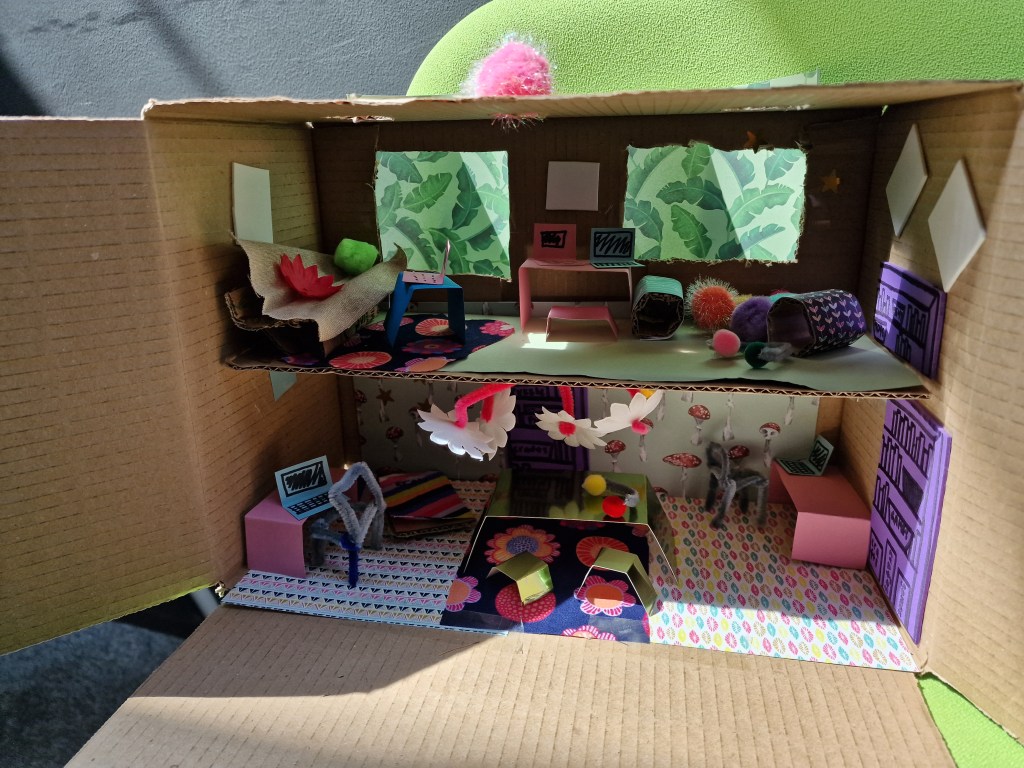
- Craft materials in our allocated room
In our group, the users were students who were also parents, who felt as thought the library space offered to them to work in with their children around, wasn’t suitable. The librarians had come up with a prototype but it didn’t suit the users’ needs. The ‘users’ group were asked to explain why it wasn’t suitable (based on the case study from the user perspective). In short, the space wasn’t soundproofed so the students couldn’t focus. The technology that the children were offered were slow, and so the children wanted to use the computers that students were using to complete their assignments. The book collection was too young for older kids. So they were bored and restless.
We were then asked to individually write down lots of ideas on post-its (in silence, so everyone felt comfortable to give their ideas). We categorised them by theme, and then at a certain time we had a curve ball in the form of new information from library management. This opened up discussion about what else we could adapt in terms of the space that was now being provided. Once that was discussed, the group split into those who worked on a presentation, and those who had craft skills and could create the new library space/changes based on our ideas.
Inclusion Through Participation: Exploring the Barriers to Real Inclusion for Underserved Communities in UX Research – Dr Victoria Olaniyan
Victoria Olaniyan (@fvolaniyan) is a Senior User Researcher at Methods. She also works with Fintech and Public Health clients as both a hands-on UX Researcher and strategic consultant.
Defining our terms:
Underserved: This covers those whose needs aren’t met.
Why Underserved?
Phrases like underrepresented, ‘hard to reach’ and marginalised puts the onus on the individual. Whereas underserved allows us the put the situation into the context of barriers outside of their control.
Who are these underserved groups?
- Groups by Demographic factors E.g. Disabled, age extremes, minorities, low income
- Groups by Social and Economic Factors
- Groups by Health Status e.g. mental health conditions, learning impairments
What are the barriers to inclusion for underserved groups in UX research?
- Lack of understanding
- Financial
- The research itself (limitations)
- Bias
- UX researchers only reaching out to people like them
- Barriers relating to physical disability
- Feeling unqualified to take part
- Lack of effective incentives
Participation or Inclusion – What Is The Difference?
Participation – Involvement of people in the decisions and processes that affect their lives, including sharing information etc.
Inclusion – No complete consensus on this, but generally the degree to which individuals feel a part of critical organisational processes.
Is participation the same as inclusion? Is one better than the other? We often use these terms interchangeably because we start with participation and hope to get to inclusion. But what we don’t see is that barriers prevent us from moving past participation.
Barriers to inclusion:
- Increasing digitisation of research methods
- Focus on unidimensional aspects of diversity
- Funding
- Lack of willingness to participate; negative attitudes and beliefs, lack of trust, lack of interest
- Unclear outcomes of the research
- Lack of research confidence or training
- Exclusionary recruitment practices e.g., poor promotion and advertising, lack of incentives, timing or location
Facilitators for Inclusion:
- Cultural congruence (do people recognise themselves in the research you’re doing?)
- Benefits to participants e.g., social or financial incentives (they can’t see the final benefit of your research)
- Defining outcomes of research to demonstrate value
- Codesign (or co-creation. Designing iteratively.)
- More funding for research
- Removal of logistical barriers (are we thinking about language or cultural barriers?
Once we do all of that, we are inclusive…
Or not
Facilitators can only cancel out barriers in the right environment.
Factors influencing the UX research environment:
- We conduct research from a place of bias e.g. us vs them
- Our language reinforces our biases e.g. hard to reach
- Lack of anti-racist practices (this means there is an indifference to racism, not necessarily that you are racist if you aren’t anti-racist)
- Viewing inclusion as an increase in numbers e.g. no other measures of impact/progress (look at how the outcomes have actually impacted them)
- Research and learning institutions are exclusionary – the ivory tower still exists e.g. language of research, power, lack of diverse workforce, research dominated by the Global North
Fixing Our Environment:
One individual / conference / library /organisation cannot change things by themselves. They are deeply rooted issues. With all of this information though we can go into UX and design better-armed.
Towards Inclusive UX Research:
- Check your power
- Value people – the people who are involved in the research.
- Use language carefully – you don’t always have to use UX language to prove your work is valid.
- Consider inclusive locations
- Collaborate
- Evidence, evaluate, share, reflect (iterative process)
- Commit to a relationship – things might not always go smoothly and sometimes relationships can come to an end.
Key Takeaways:
- Value fighting for real inclusion
- Participation is not the end point
- Inclusion is never complete
We were asked at the end of Victoria’s talk whether we had any questions. One person asked about a common library issue – how do we attract more diverse employees (to a majority white, middle class profession)?
Victoria made the point that positive action like posting jobs where people are is great. But what I found really important was her next point – what are you bringing them into? The environment of the organisation itself. Is the environment itself stuck in traditional and rigid ways of working? Is the vision of the company clear and diverse in practice? And if it isn’t, what kind of effect is that having on people who are for example – not white, not from a middle class background, not disabled, not neurodiverse? Something to consider…
Day 3
More Than Just Working Together: Reflections on UX Work and Collaboration New Title – It’s Not Just You – Shelley Gullikson
Shelley Gullikson is the Web and UX Librarian at Carleton University Library in Ottawa, Canada. The original project she started involved interviewing 20 participants from academic libraries in 5 countries, on how their UX work was structured and supported.
Main Themes Found:
Structure of UX Work –
- Have a formal group – working groups or departments were able to directly show the impact.
- Authority to implement change is important.
- Move beyond web UX (those who had web-focus had a lack of support, authority and impact)
Support –
- Concrete management support is important as it enable managers to allow people the time to work on UX.
Personal takeaways –
- Move beyond web UX – include non-web UX work.
- Create a UX committee to allow communication and collaboration with other library staff members.
But as time went on, although Shelley felt like she was working with other people, she actually found that she was working on her own a lot. So she got in touch with half of the people she’d interviewed previously with the plan to interview them again. So she could get more insights.
It was clear that you can’t do UX in isolation – you can’t be a lone wolf.
![Create a UX Group or UX position and stop there - "[I feel like] they hired me so they could check a box on a list of priorities: 'UX - alright, we have a person here: check.' But then: nothing."](https://nicolasemple.co.uk/wp-content/uploads/2023/06/uxlibs-2023-staff-interview-findings-2-597108669-e1686318084798.jpg)
!["[Management] had an idea of how students did use the library and when what you find doesn't conform with that idea, then, rather than act on it, it's kind of sort of hidden away and forgotten about."](https://nicolasemple.co.uk/wp-content/uploads/2023/06/uxlibs-2023-staff-interview-findings-1-3130947079-e1686317924461.jpg)
She wanted to understand what the right kind of support from management was like – what does meaningful support look like? These are top level things needed:
- Time
- Money
- Incentives for participants
- Other staff to help with the work
- A genuine interest in UX
- Valuing UX
Management support is collaboration:
- They need to know what to give you that you need
- And vice versa
- And you both, collaboratively need to set expectations
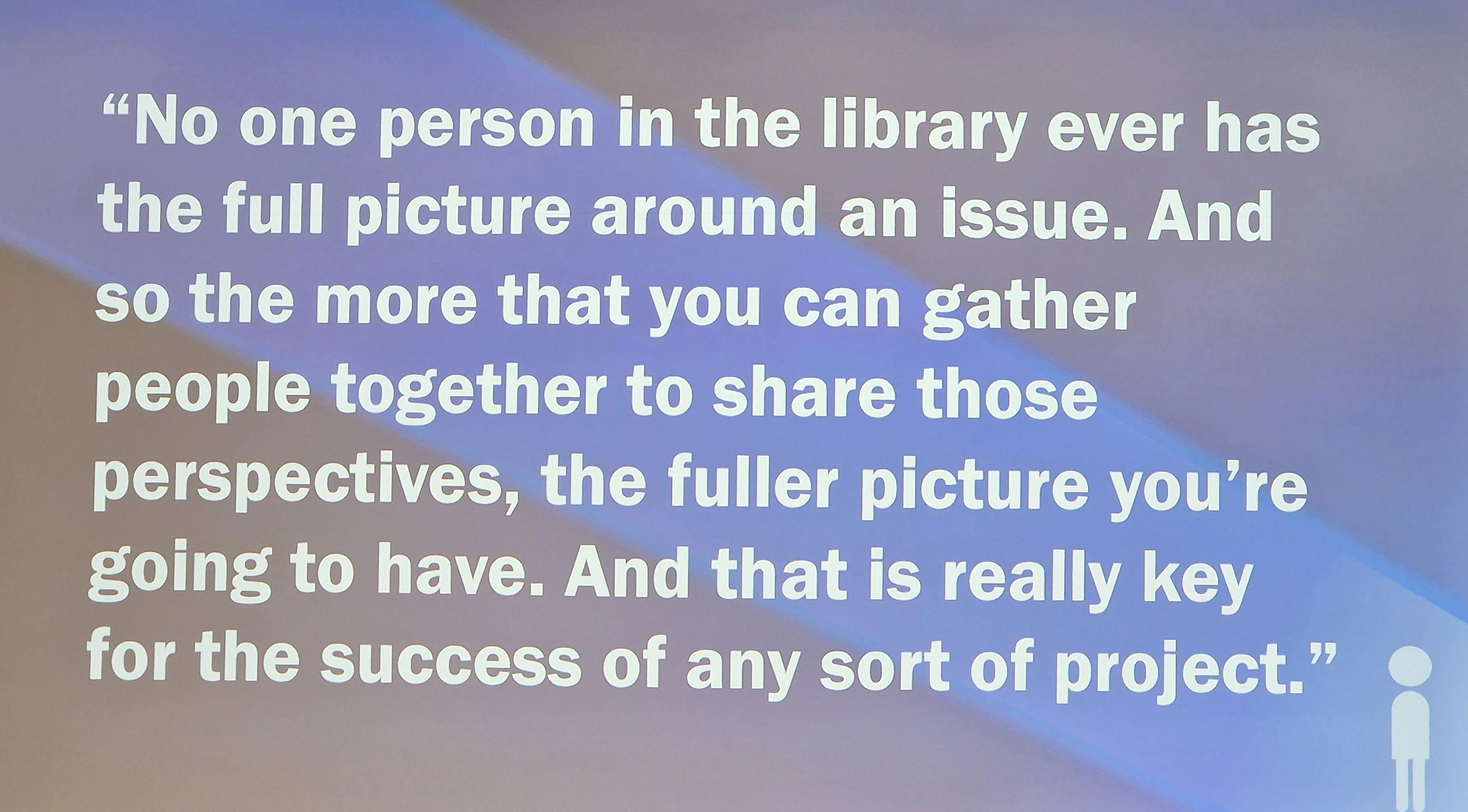
A lack of expectation can lead to a lack of action when the truth comes out. The reality for students (or any library users) is sometimes an uncomfortable truth. Clear expectations helps align UX with the library objectives and goals. But when UX is “valued” but [the results] not expected, if the findings conflict with the status quo then it is not acted upon. Management (a lot of the time) may be driven to value UX in the hope that the findings will support something that already exists.
“We can’t have a discussion if you’re pretending to agree with me”
Lack of direction also has negative impacts on UX workers. If they feel that it doesn’t matter what they do, they then also think that whatever they do doesn’t matter.
Things to Think About:
- Work with people: you can’t do UX in isolation.
- UX is wonderful and exciting but it can also be particularly dispiriting.
- This is why UX needs to be collaborative, because the failure is not your failure alone. Any success is not your success alone.
- We all work in different contexts with different people – what works for one person might not work for you. And what works this year might not work next year. Things change.
- Keep trying things: take breaks, beware of burnout, but keep trying.
- “Do it where it’s going to be easier”
- Do more of what makes you happy, do less of what makes you miserable. And celebrate every win. (Like Emma Thompson said, don’t leave your fiddle at the door)
And most importantly – reach out to other UX folks, because it’s not just you.
UX and Spatial Skills: Spatial Ability and Cognitive Load in User Experiences – Clodagh Reid
Clodagh Reid is an Assistant Lecturer in Technology Education at TUS and a postdoc researcher. Our spatial skills are integral to our “ability to make use of simulated mental imagery to solve problems” (Schneider and McGrew, 2018:125). Clodagh wanted to look at how students use their spatial skills in relation to cognitive load in the context of an academic environment. She wanted to explore how we could observe student behaviour so that educators could support students in an evidence-based way.
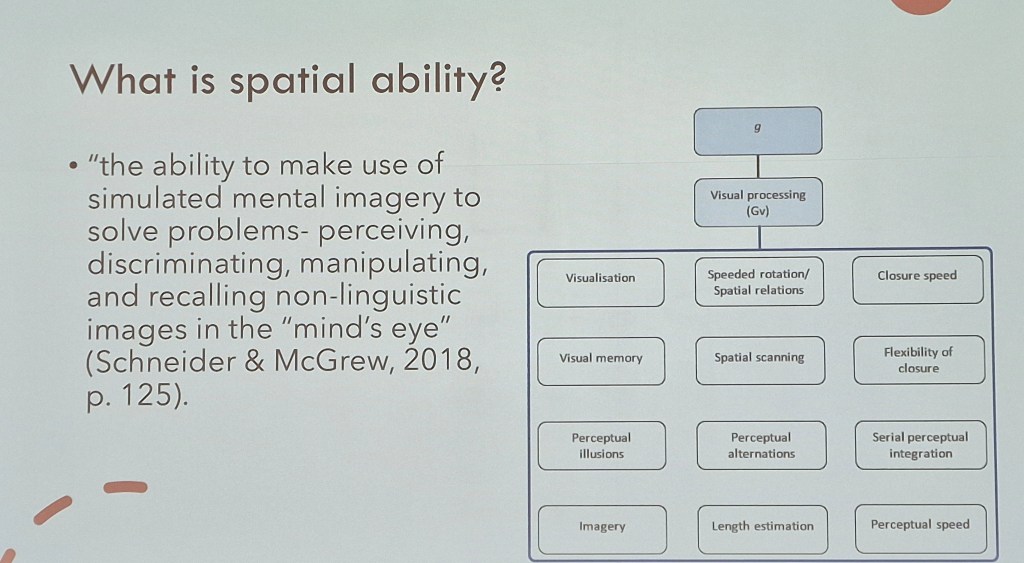
Cognitive load theory is the effort that our brain goes through to try and process information, to store it and then to use it (retrieve it) at a later point. This can be measured by things such as self-reports and sensors (your skin’s electric response to stimuli).
She did a test with 100s of students with a spatial awareness toy (moving 4 discs of different sizes from one pole to another, without placing a larger disc on top of a smaller one). The students that had higher spatial skills solved the problem quicker in less moves. High spatial skills means you are able to visualise what needs to happen before you do it. Lower spatial skills had more of these cognitive load behaviours:
- Stopping behaviours (student sat back and observed the problem then engaged – and repeat)
- Decision behaviours (hesitation, stopped themselves)
- Progressive behaviours (lift the disc, hover and pause)
Summary:
- Spatial skills can influence how people express themselves through cognitive mapping of reporting of UX
- Behaviours as an indication of too much mental effort being experienced.
The Long and Winding Road? Inclusion in UX Data and Recruitment – Anna-Lena Kleinert and Eve Jamieson
Anna-Lena Kleinart and Eve Jamieson are both Service Development Managers at King’s Libraries and Collections. Library Champions is a continuous programme that allows the library team to work directly with students. The programme is well branded and marketed, and is used as an overarching programme from lots of projects taking place within the library. The programme was used to attract students to get involved with UX and co-creation projects with library staff (over 3-4 months, 10 hours).
They had a problem with retaining students and had doubts about recruiting diverse students. They had a project within the programme called ‘Trailblazers’ where they were asking for students to suggest inspiring people for an online exhibition that would showcase the lives and works of “trailblazers”. The demographics of the suggestions that were made reflected the demographics of the group of students (mainly white females), and so of course wasn’t diverse.
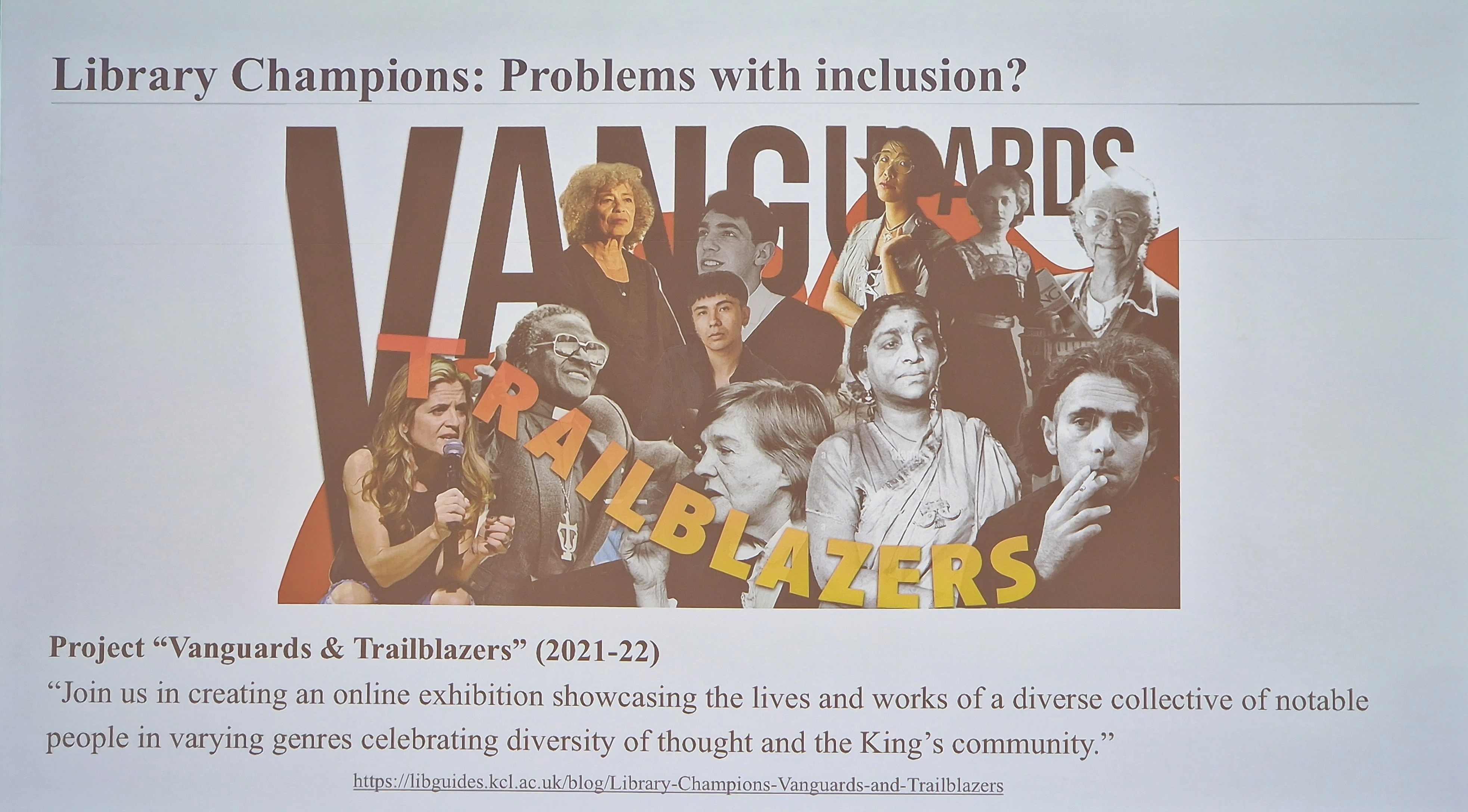
They had another incomplete project – quantifying inclusivity. Issues again included student retention, and also the aims were too broad. They decided to have conversations with other teams in the university:
- Anti-racism staff group in library (Community of Practice
- Student Union and Societies (KCLSU)
- Faculty contacts e.g. Student Experience Managers / Disability Liaison
- Disability Support Team
- Equality, Diversity and Inclusion (EDI) team
- Other King’s teams dedicated to EDI e.g. Student Success, Widening Participation
They also decided to do a Library Champion Survey, which ended up having a low response rate. It did give them enough to create a few goals, which were:
Goal 1: Make rewards valuable and visible (including pay) –
- They started to pay their library champions £15 an hour via an employment agency (incentives).
Goal 2: Reach out to underrepresented groups –
- Partnered with student union to selected societies.
- Diversified their channels for promotion – more diverse staff members included in content shared.
Goal 3: Understand demographic make-up of champions
- Introduce voluntary diversity monitoring form for library champions
- There was a central form they could adapt, but they weren’t sure if they were justified in asking certain information.
Summary of changes:
- Pay for LCs
- Diversity monitoring
- Proactive outreach to underrepresented student communities
- Recruitment to wider pool rather than specific project
This improved set up for the Library Champions allowed them to start an equality analysis of the frontline model. With this analysis, they aimed to “systematically analyse the effects of changes to Libraries and Collections frontline model on different user groups within the King’s community”. The changes included:
- A Meet and Greet space and a move away from fixed help desks.
- Change to staffing model.
- Remote service – FAQs and Live Chat service.
- Space monitoring and helping users at the “point of need”.
The analysis was done through a student survey, existing feedback and research and a literature review. However, there were limitations in the form of EDI gaps of information including:
- Data on who is using the help services
- Who is associated with UX research
Understanding the Use of Physical Spaces in the Library: A Collaborative Approach – Karina Arrambide
Karina Arrambide is a User Experience Specialist at the University of Waterloo. There are 2 libraries at University of Waterloo: Dana Porter and Davis Centre.
“The investigation of physical spaces in libraries is critical to support user services and improve their experience.”
Karina Arrambide, 2023
The research that Karina discussed in her talk was on the use of physical spaces in the Dana Porter library, and the process of identifying pain points. The space in question could be used (and booked) by staff and faculty for many things, and when it wasn’t booked for something else, the space was available for all students. The space itself was designed to encourage a collaborative environment. It had furniture like moveable desks that could be adapted for any need within the space.
Karina had 4 research questions that would explore how and when the space was being used, who was using the space and whether the space was being rearranged and in what ways.
Stakeholders:
- UX Team
- Library staff
- Facilities
- Communications
- IT
Methods and Procedure:
They planned mixed approach research that included observations, surveys and interviews. They were able to collaborate with fourth year students from a Systems Design Engineering course which focused on cognitive ergonomics and used design principles. Students were tasked with different tasks about the physical spaces, they spoke to other students and presented ideas to staff based on the findings.
Main findings:
- Space is used as both collaborative and individual
- Power outlets not accessible
- Need for updated lighting
- Height of desks were not adjustable
- Users are not sure if the space is available
- And some didn’t even know it existed
Recommendations:
- Repaint walls to improve space
- Wall-to-wall and rollable whiteboards
- Improved lighting to reduce eye strain
- Floor mounted pop-up outlets
- Green spaces to reduce stress
- Promotion and advertising
- Calendar to book space
They wanted a space that was adaptable and open to all users and accessible ergonomic furniture was incredibly important. There were many pain points and challenges still exist. It does open up an opportunity to improve space but no changes have been made yet. They would like to do more research to validate findings, both qualitative and quantitative.
When the audience began to ask Karina questions, one of them was about the kinds of barriers they have in relation to the space and the research itself. Karina explained that they don’t have a lot of space to work with. Students wanted more digital options rather than a large physical collection. So reducing the physical collection would create more space, but that is a whole bigger project that involves more stakeholders, so whether this could happen in the long term is still unclear.
Co-designing and Re-imagining Library Services: A Librarian’s Tale – Nicholas Heavy
Nicholas Heavey is a Teaching and Learning Librarian at University of Sussex (and was kind enough to give us a tour of the library space.)
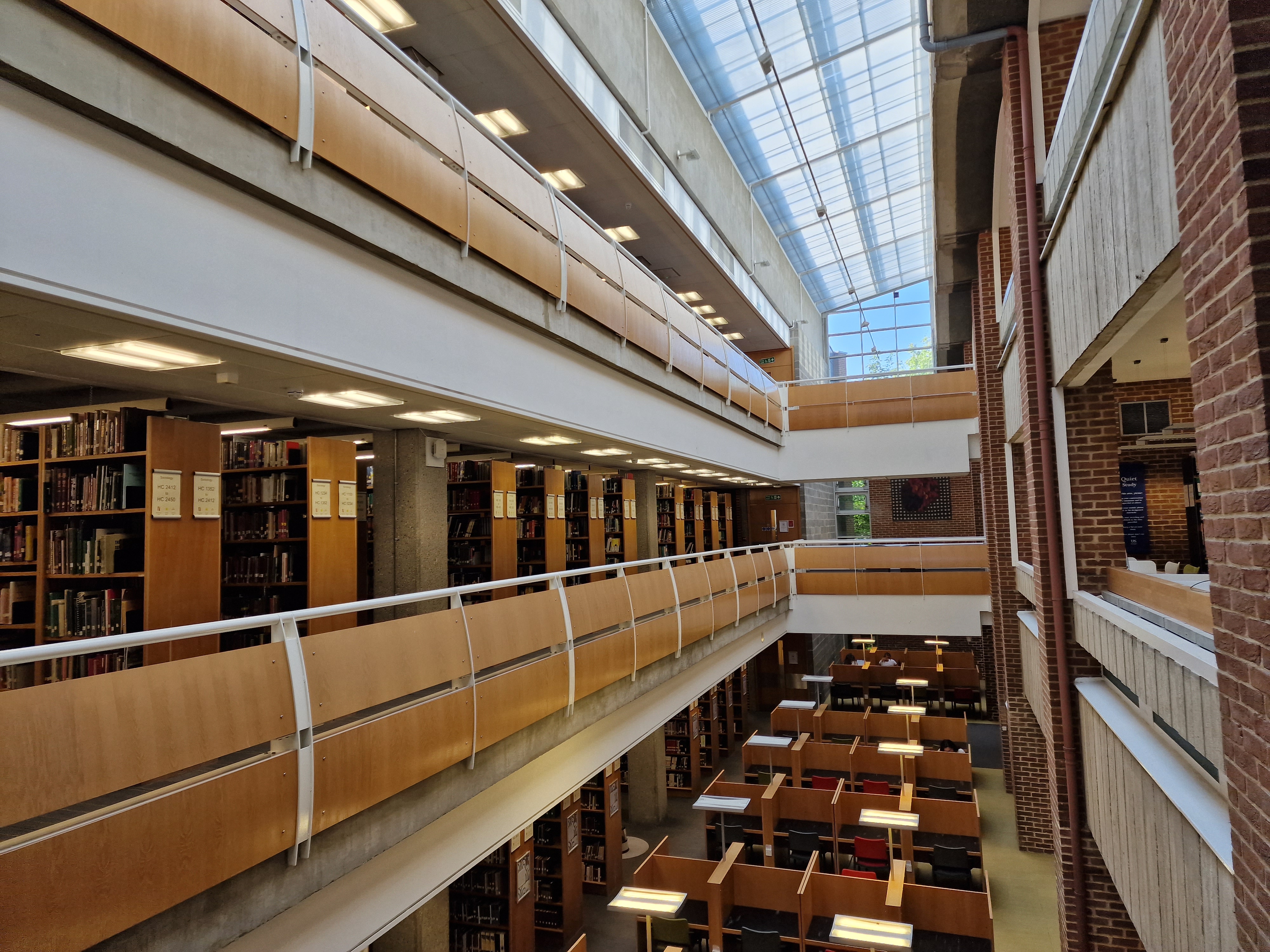
UX is a part of Nicholas’s role, along with one other member of the library team at Sussex. His talk explored 3 projects he worked on that spanned the whole of the library service – not necessarily just his area of teaching librarianship.
At University of Sussex Library they have their own student group (as it seems many have nowadays!) and this is called the Student Connector Programme. Within this programme, students and staff work together, collaborating to improve student experience. They encourage all students from all backgrounds (especially those that are underserved) groups to apply.
For all 3 UX projects they used the double diamond approach. In one project they reached the deliver stage, though the other two did not.
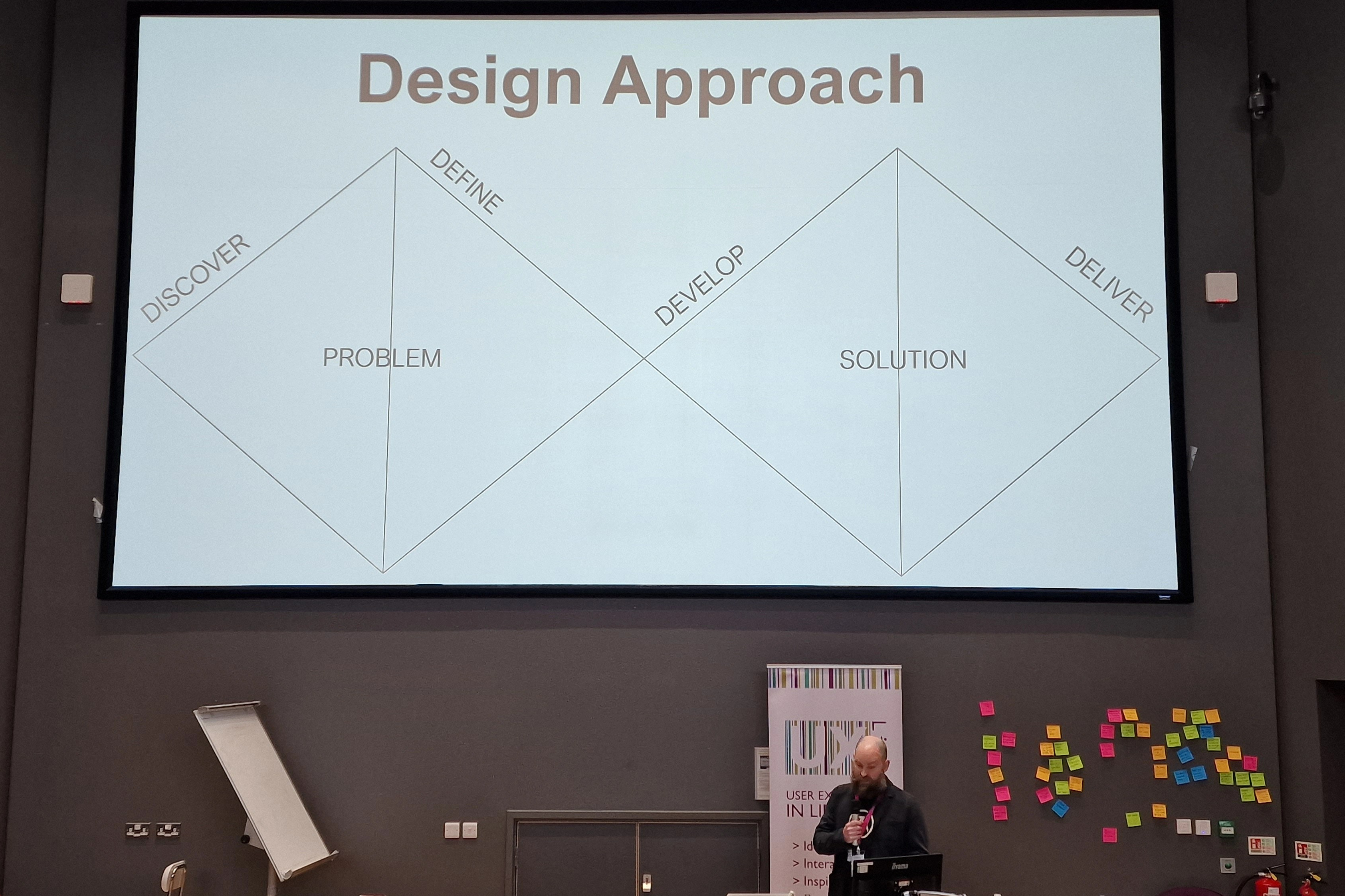
Project 1: User Journeys: Looking at physical and online spaces to develop service blueprints
The objectives for the first project were to get a sense of expectations of students of the physical and online spaces, and how to create a user-centred environment. They made the design approach very explicit to students, as something they could add to their CV.
They asked students to create 3 user journeys (book a room / get to the room / in the room)
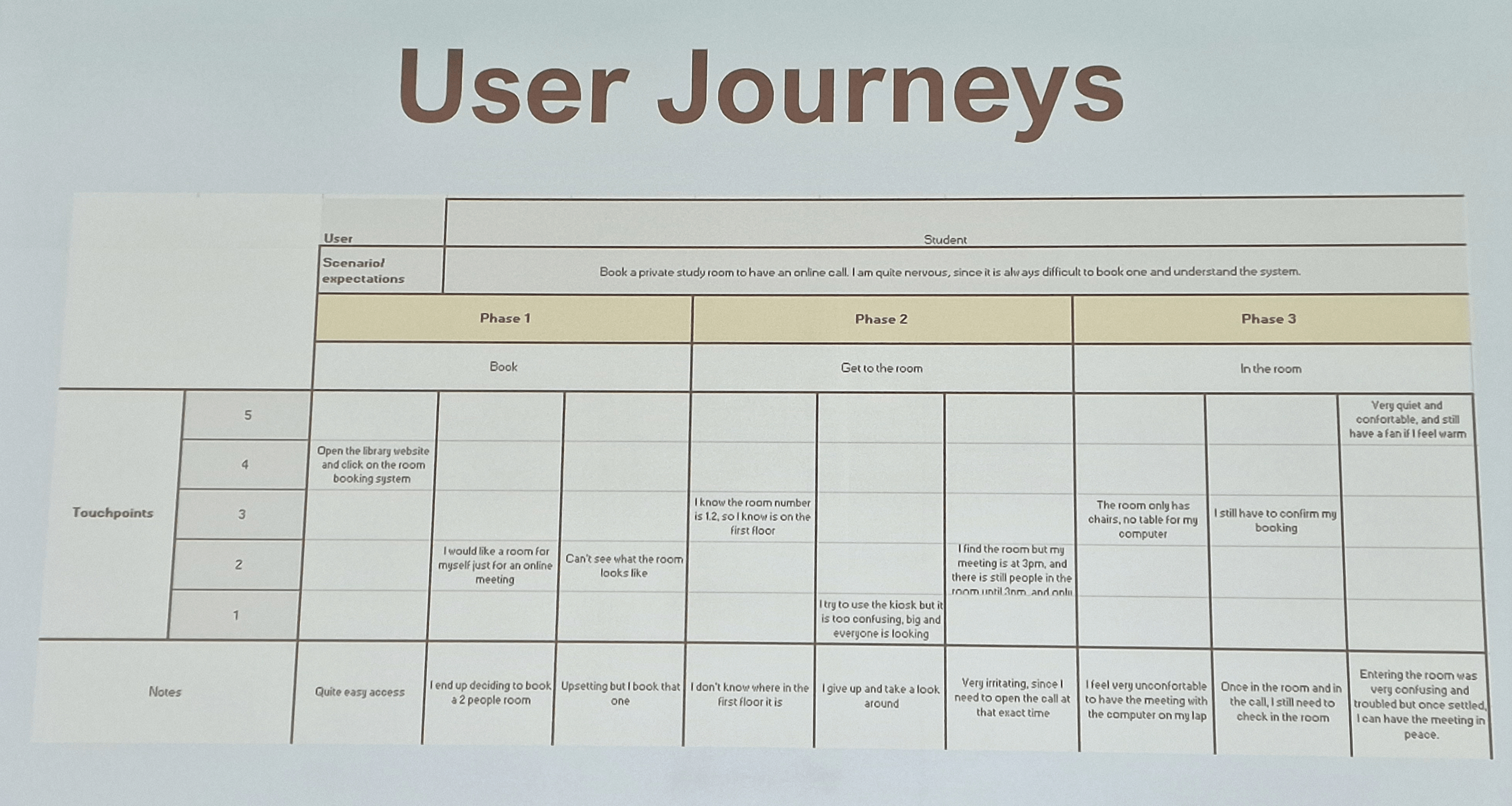
They was developed with students and staff working together, and it was assessed where the students are at – for example did they feel comfortable working with staff? With the blueprint they were able to start finding where the pain points were.
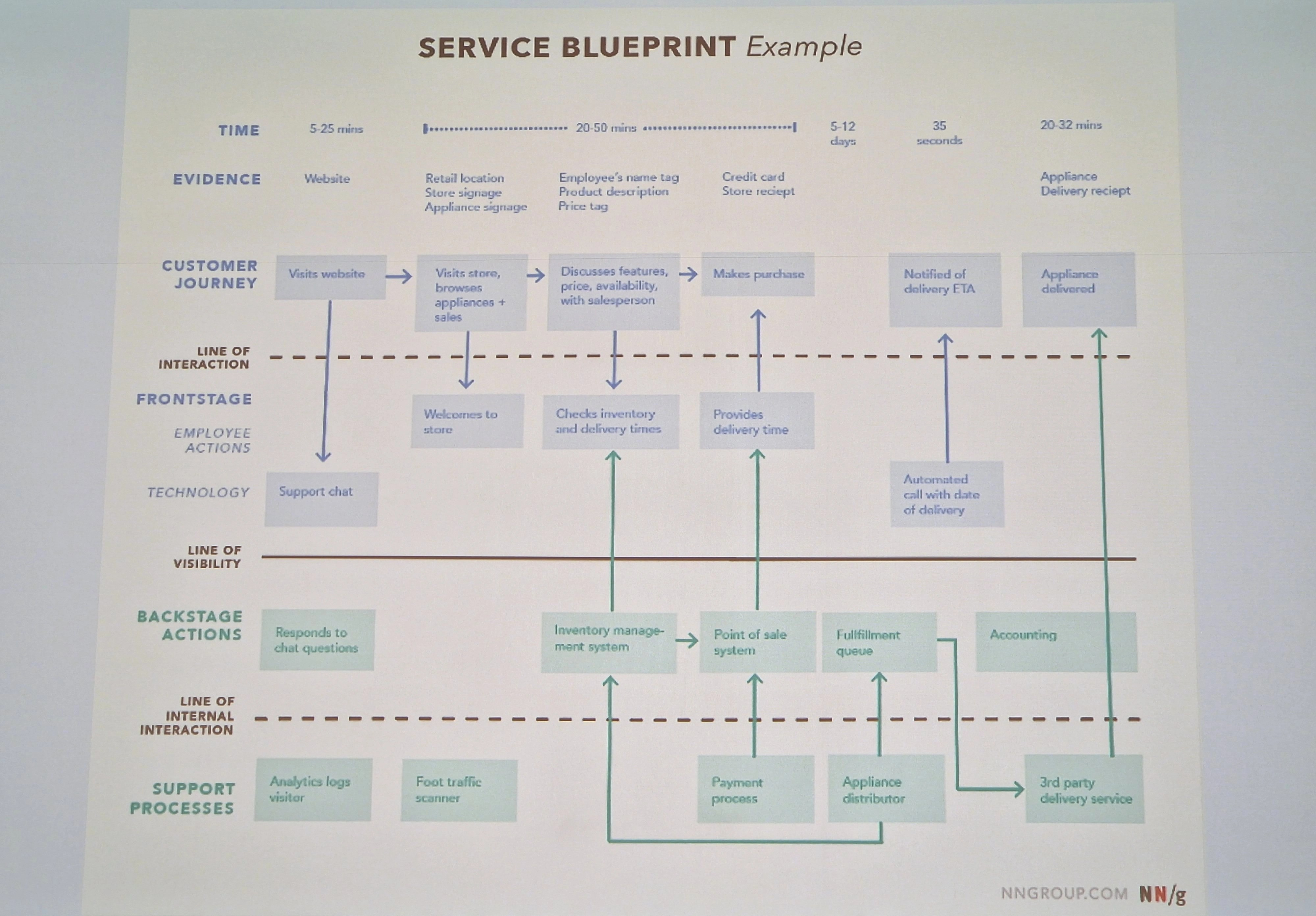
Project 2 – Library Induction: Students developed Welcome Week induction
They wanted to throw away their assumptions of a library induction. They asked for students to reflect on their experience. They wanted a traditional walking tour – they didn’t necessarily want a video or a scavenger hunt (all the things they’d done in previous years that had low engagement). They identified materials the library was missing and they looked at what other universities had. They then did a survey – tried to find what students found the most challenging about the library space as a newcomer. The students then did a presentation on their findings.
Project 3 – Co-creating skills sessions: Develop skills sessions with students.
Nicholas is a (teaching librarian) first and foremost, and so wanted to try and create a first year session that really hit on what first years needed. They worked with 2nd and 3rd years and post grads to inform this. they wanted to create the ideal session and so asked these students to identify challenges that they themselves experienced in first year. They looked at student’s individual experiences – what was missing? What did they struggle with?
Challenges / Opportunities:
- The level of structure
- Influencing the outcome
- Various levels of engagement – separate workstreams
- Have to manage when one student isn’t getting involved, the other students can get frustrated.
- Building trust – demo sessions
- Skills gaps – training, support, making a good powerpoint for example
- Came away with great ideas but not necessarily a fully fleshed out workshop
- Communication and collaboration can be challenging.
- Difficult if roles and responsibilities aren’t clear
- Positives – great input and ideas.
Storytelling With Data – Larissa Tijsterman
Larissa Tijsterman (@TheLibraryHelp) is a Projectleider Klantenservice Bibliotheek (Library Customer Service Project Leader) at the University of Amsterdam. Larissa loves the TV programme ‘The Profit’ and shared with us what drives a business? (according to Marus Lemonis – from The Profit).
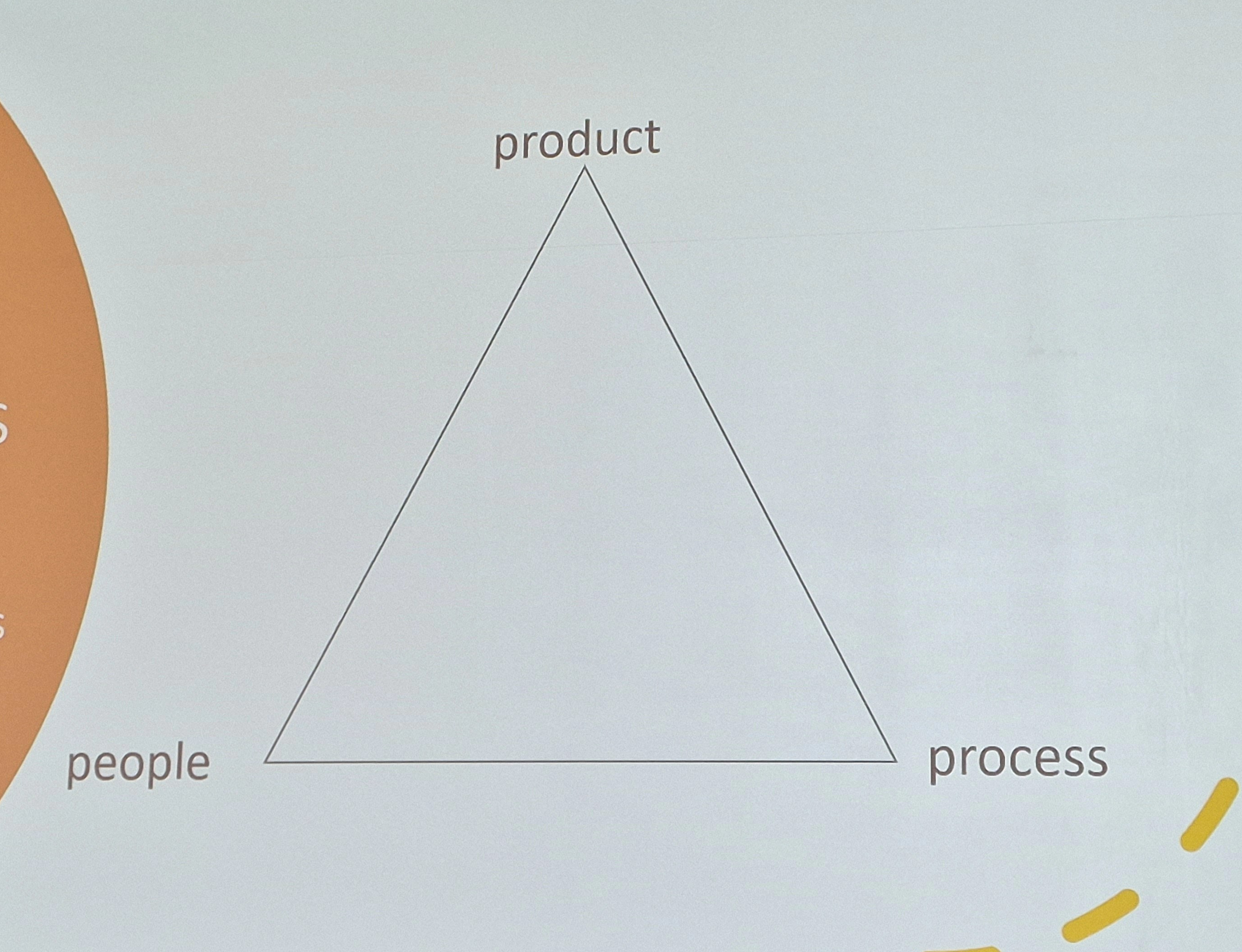
The image she shared was a triangulated diagram with 3 points – product, people, process. At the centre of this triangle was ‘story’. Larissa explained, even if you have the prettiest graph, if you don’t have a story people struggle to engage and understand what it means or why it should be important to them. A lot of us are not professional data analysts, but we work with a lot of dashboards that hold and present a lot of data. So how do we take raw data and create action?
Raw data is presented as graphs and tables. Great for people who like to dip their toe into data. But these are just facts. They’re not helpful in telling a story. Most stories should start at ‘insights’ it’s when we take the data and put it into real-life context.
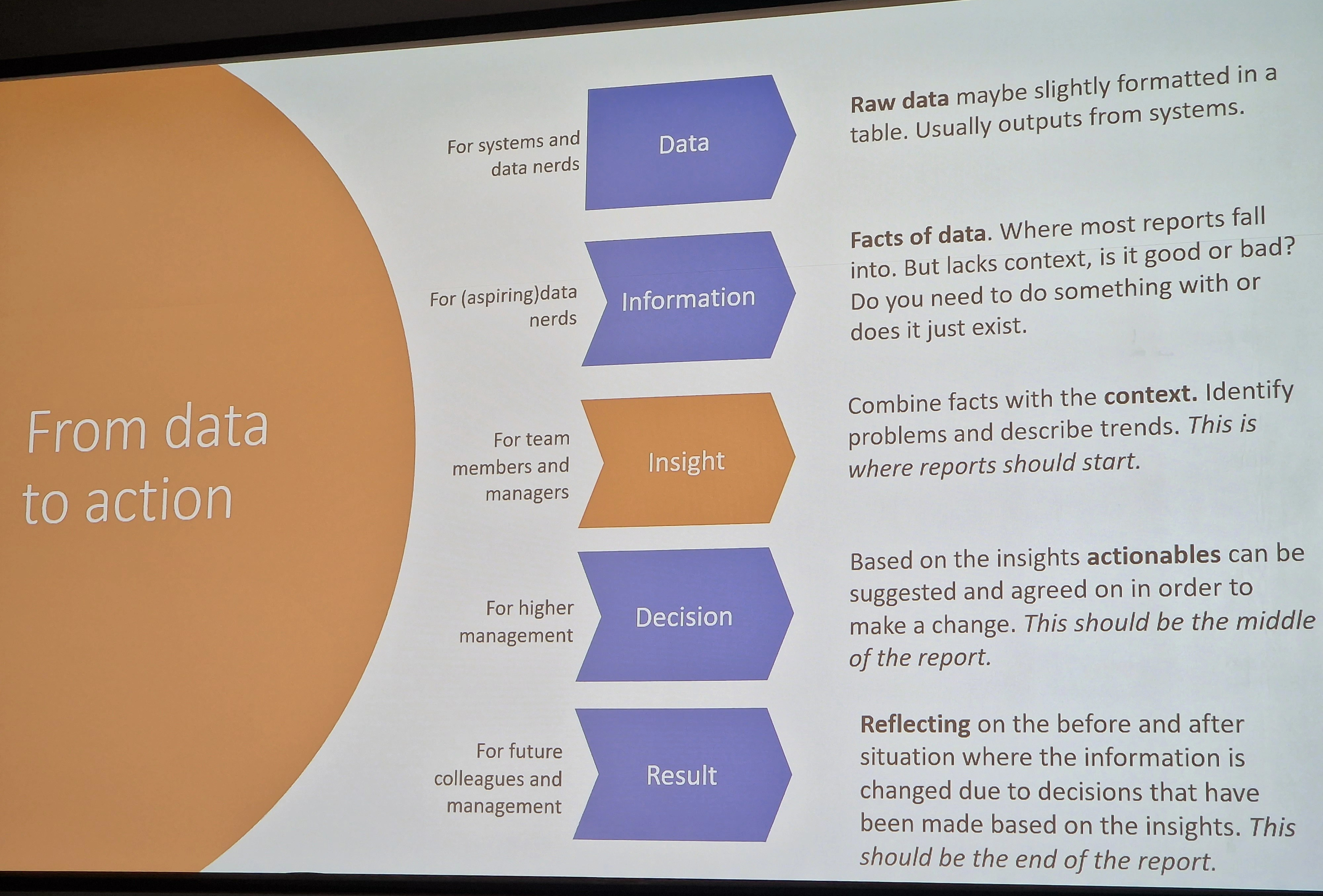
Where you add the qualitative and quantitative together and present to your colleagues – this is when it is useful. Then we have the decision stage, this is what you want to present to higher management. Results are for our future colleagues and management, when they want to understand what the situation was built from or driven by in the past.
Crafting a Story:
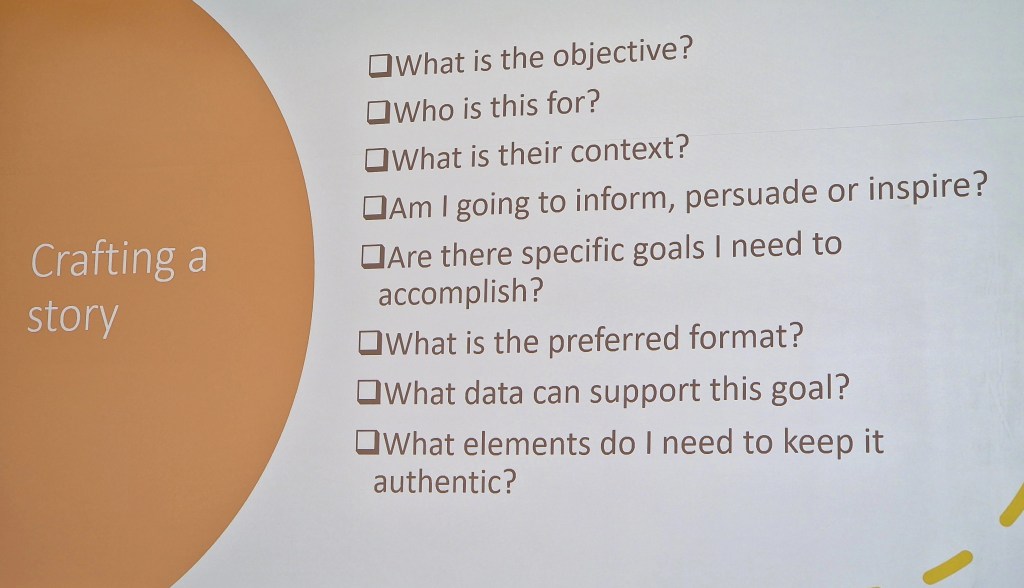
Before you start creating a story, you need to know what you want to achieve with it. What do you want people to take from it? What are the limitations? Will this have an effect on the format you present it in?
Larissa shared numerous examples of data that is presented us in the work environment, usually in the form of tables with lots of numbers and blocks of text – all with very little context. The issue with all of these was the lack of ‘decisions’ that were driven by this data. So for many people the data will be meaningless.
Storytime:
We were then given a task – the scenario was:
We need permission to fix issues with the check-out machine. But the manager is going on holiday for a month and you get a maximum of 3 minutes. They are new to the library field, but have experience in retail. You did a usability test and found that 40% of the questions asked at the library desk are about the process of checking out. It is a self service machine. There is a lot of jargon and unclear language in the interface, with no completion screen when returning books, and the machine shows the amount of open fines after every transaction – even though the library does not do late fees.
How do we communicate this to the manager using storytelling? (feel free to try this out for yourself).
Second Task:
HR needs you to inform your team that sick leave is too high, and will be looking at measures in order to reduce the frequency of staff calling in sick. The team is a customer-facing team within an academic library. Half of staff are 55+ and the rest are students or in their late 20s. The years that were included by HR as examples of this are from 2019-2023. In 2022 especially there was a lot of sickness, it was a rough year – covid cases were high and there was a nasty flu in autumn. How would you approach this using storytelling?
Conference Close:
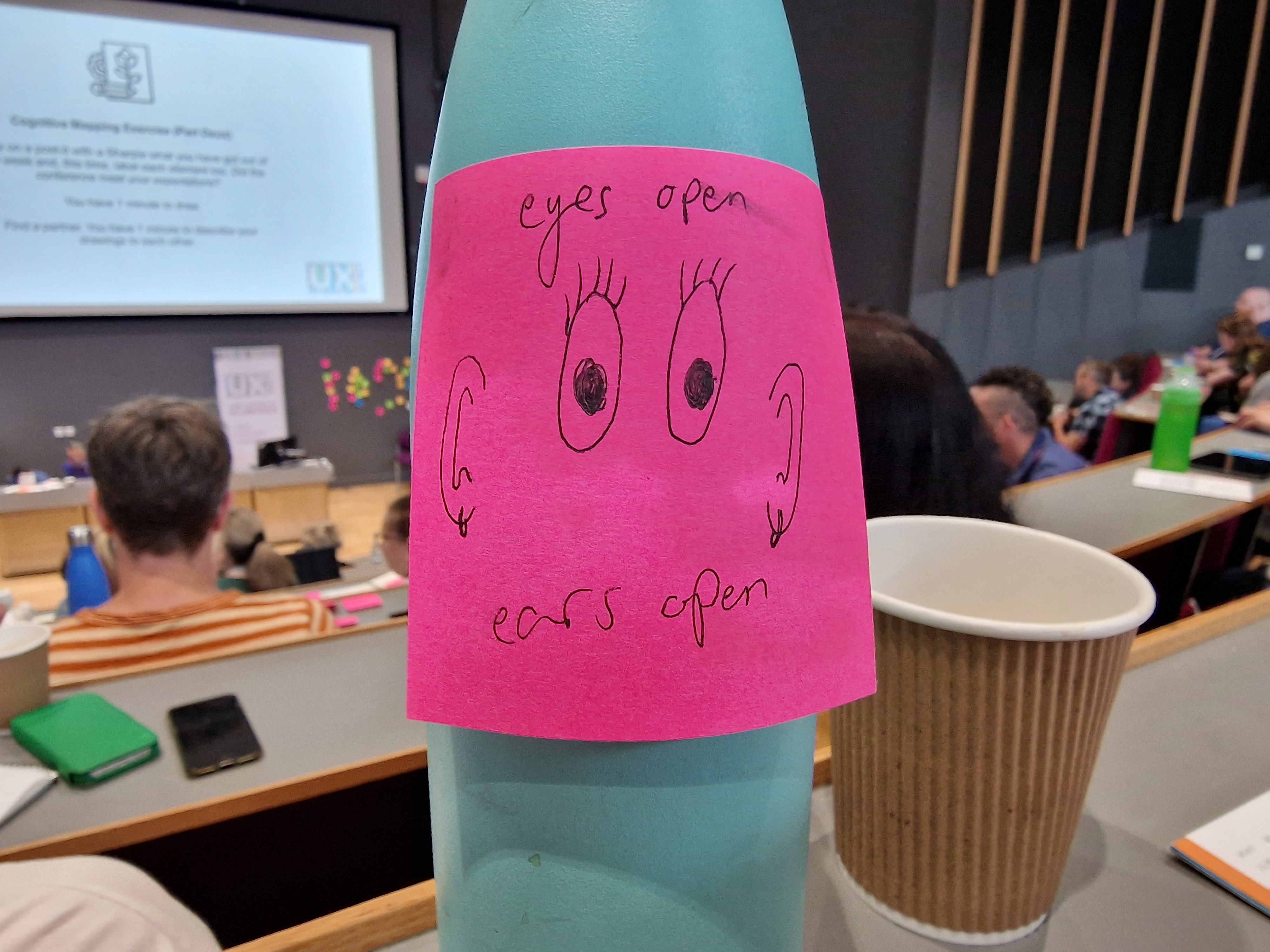
That brings us to the end of my experience at UXLibs 2023 conference! And what a fantastic and inspiring conference it was. I’ll be spending the next week or so mulling over everything that I heard and saw, and will be sharing a post on what I feel were the biggest takeaways for me in the near future. Until then… keep your eyes, ears and mind open.


 Nicola Semple
Leave a reply to Nicola Semple Cancel reply